
PERSONAL FINANCE / PRACTICAL SAVINGS GUIDE / 2026
Turn irregular bills into manageable savings targets—and keep your emergency fund for actual emergencies.
The car insurance renewal arrives. Then a holiday trip, a dental bill, and an annual subscription hit within a few weeks. None of these expenses is necessarily a surprise, but together they can make an otherwise reasonable monthly budget feel impossible.
The solution is to save separately for predictable irregular expenses instead of treating every large bill as an emergency. A sinking fund is money you set aside gradually for a known or reasonably foreseeable expense. An emergency fund is reserved for genuine financial shocks.
You do not need a special app or expensive budgeting system to start. A spreadsheet, separate savings account, or labeled envelopes can work—as long as you know how much to save, when the bill is due, and where the money is held.
Affiliate disclosure: This article may contain affiliate links. We may earn a commission from qualifying purchases made through those links. You do not have to purchase any product to use the budgeting methods described here.
01 / UNDERSTAND THE DIFFERENCE
The essential difference: expected bills versus financial emergencies
A sinking fund pays for expenses you can reasonably anticipate, even if their exact amounts change. Think car registration, annual insurance premiums, back-to-school purchases, routine car maintenance, and holiday gifts.
An emergency fund serves a different purpose. It helps absorb unplanned events such as a sudden loss of income, an urgent repair, or an unexpected medical expense.
The distinction matters because using emergency savings for every predictable bill can leave you exposed when an actual emergency happens.
A simple test is to ask: Could I reasonably have expected to spend money on this category during the year? If yes, start by considering a sinking fund. If no, it may belong in your emergency reserve.
Some expenses overlap. Routine vehicle servicing is predictable, while a sudden major breakdown may be an emergency. Use your own circumstances rather than forcing every expense into a rigid category.
Why a normal monthly budget can miss the problem
A budget that accounts for rent, groceries, utilities, and transportation may still underestimate actual spending.
The Consumer Financial Protection Bureau recommends reviewing several months of transactions and accounting for less frequent expenses. This includes insurance, medical costs, school-related purchases, gifts, and other seasonal bills.
That means the goal is not simply to cut everyday spending. It is to convert irregular obligations into manageable monthly savings targets.
02 / CALCULATE YOUR TARGET
Calculate your sinking funds with real numbers
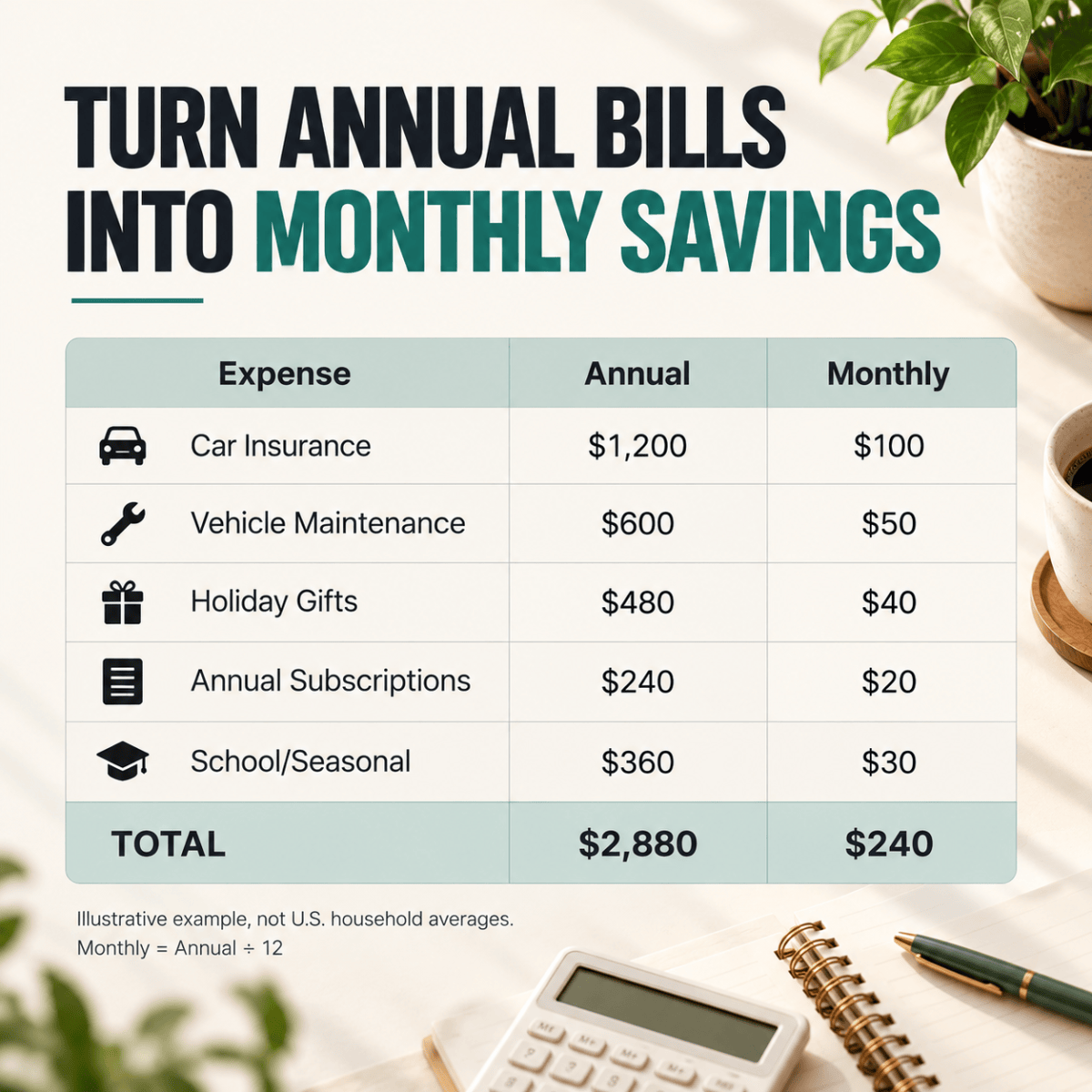
Suppose a household expects the following expenses over the next 12 months:
| Expense | Annual target | Monthly savings |
|---|---|---|
| Car insurance | $1,200 | $100.00 |
| Vehicle maintenance | $600 | $50.00 |
| Holiday gifts | $480 | $40.00 |
| Annual subscriptions | $240 | $20.00 |
| School or seasonal expenses | $360 | $30.00 |
| Total | $2,880 | $240.00 |
These figures are illustrative household assumptions, not national averages or quoted prices.
The calculation is straightforward:
Monthly savings = (Amount needed − Amount already saved) ÷ Months remaining
For the example above, $2,880 divided by 12 equals $240 per month, or approximately $110.77 per biweekly paycheck when budgeting across 26 paychecks annually.
However, the annual average only works when the timing is realistic. If a $600 insurance bill is due in three months and you have nothing saved, you need $200 per month, not $50. A deadline-based calculation is more useful than a simple annual average.
If your current budget cannot accommodate the full amount, prioritize legally required, essential, or near-term obligations. Reduce optional spending targets before cutting food, housing, medication, or minimum debt payments.
03 / CHOOSE A METHOD
Three ways to manage sinking funds
There is no universally best tool. The right choice depends on how you pay bills, how often you use cash, and whether a physical system makes budgeting easier.
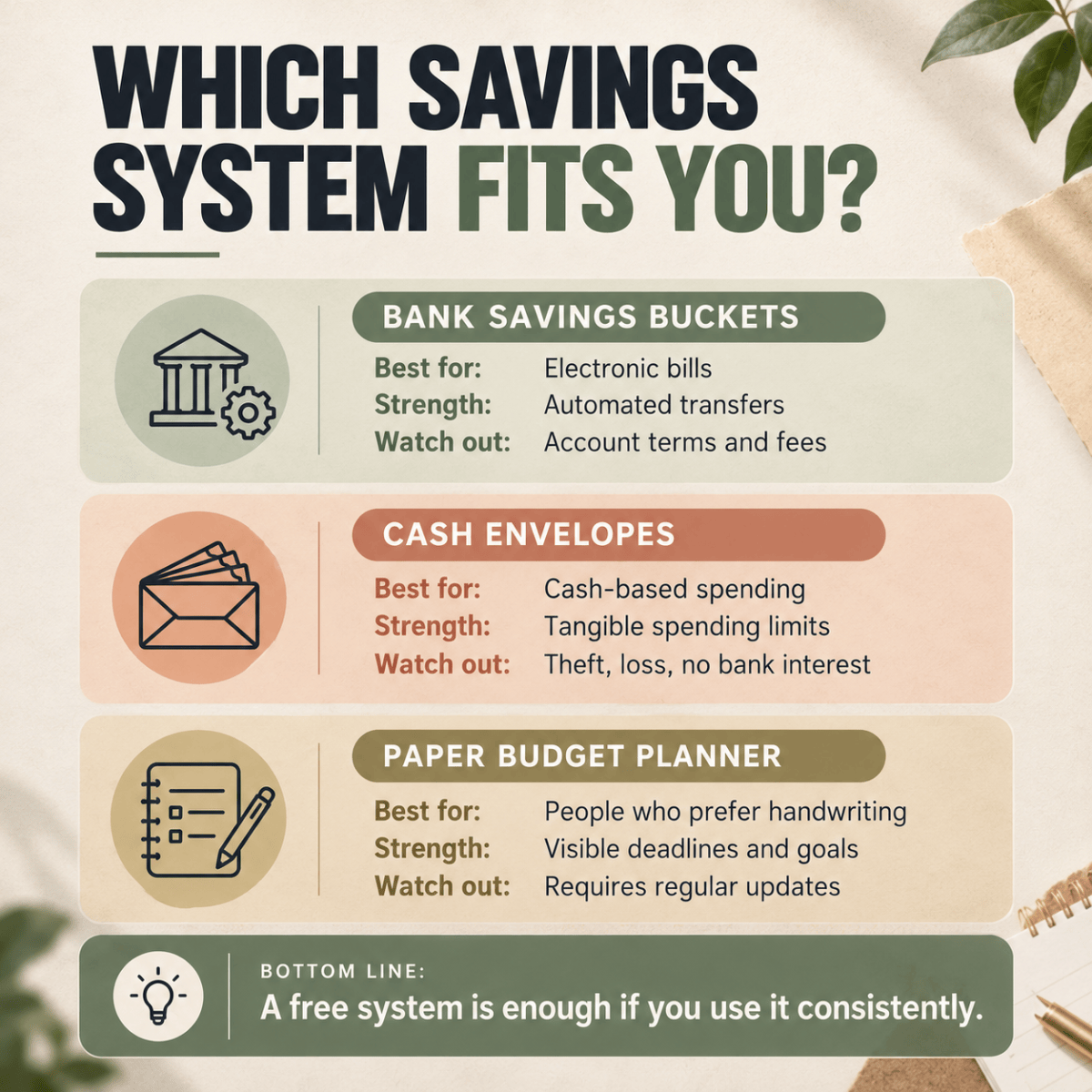
Option 1: Separate bank savings buckets
For most people who pay bills electronically, a dedicated savings account or an account with labeled savings goals is the simplest starting point.
You can automate a transfer after payday and keep a record of how much belongs to each upcoming expense.
The advantage is convenience and reduced exposure to physical cash loss. The limitation is that not every bank offers useful goal categories, and account terms may differ.
When choosing where to hold the money, distinguish a deposit account at an insured bank from an account offered through a nonbank financial app. FDIC coverage for third-party arrangements depends on specific conditions and does not protect against the nonbank company’s own failure. See the FDIC guidance on third-party banking apps.
Option 2: Cash envelopes
Cash envelopes make spending limits tangible. If your household primarily pays for groceries, gifts, or discretionary purchases with cash, physically separating those amounts may help you stay aware of what remains.
The disadvantages are significant: cash does not earn bank interest, can be lost or stolen, and is inconvenient for many recurring electronic bills.
Avoid keeping substantial emergency reserves or large annual bill balances in an unsecured home binder.
Option 3: A paper budget planner
A paper planner is useful when your biggest challenge is not moving money but remembering due dates and reviewing spending consistently.
You can record annual obligations, monthly targets, balances, and payment dates in one place. The money itself should still be kept somewhere appropriate.
A planner does not create savings automatically. If you rarely update notebooks, a free spreadsheet or bank tool may be better.
04 / OPTIONAL BUYING TOOLS
Which budgeting tool is worth buying?
OPTIONAL PRODUCT 01
Clever Fox Budget Planner PRO
The manufacturer describes it as a 12-month budgeting planner. Its listed U.S. direct-store price was $29.99 when checked, but price and availability can change.
Best for readers who prefer writing down savings goals and reviewing them weekly. Not recommended if a free digital tracker already works for you.
OPTIONAL PRODUCT 02
Clever Fox Cash Envelope Budget System
The manufacturer lists this cash-envelope system among its budgeting products. It is more relevant to households that deliberately use cash for selected spending categories than to readers who pay nearly everything electronically.
Before buying, confirm the current kit contents, physical size, and U.S. retailer listing. Do not assume an Amazon listing is identical to the manufacturer’s version.
When buying nothing is the better choice
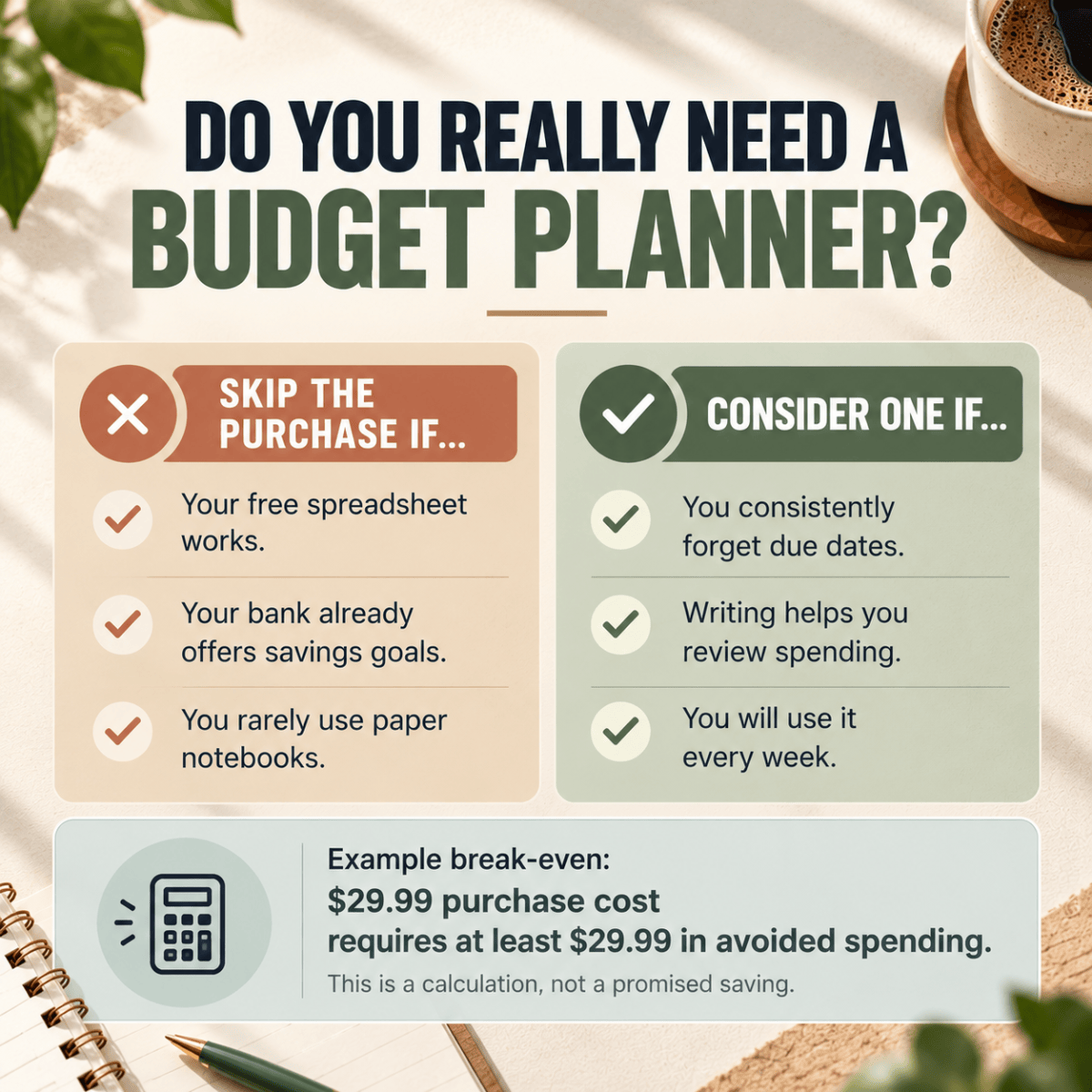
If your bank already offers free savings goals, or you can reliably track expenses in a spreadsheet, spending $20–$30 on a planner may add no financial benefit.
For example, a $29.99 planner would need to help you avoid at least $29.99 of unnecessary spending just to offset its purchase price. That is a break-even calculation, not evidence that the planner will produce those savings.
Start with a free system for 30 days. Buy a physical tool only if you can identify a specific problem it solves.
05 / TAKE ACTION
A practical setup for your next paycheck
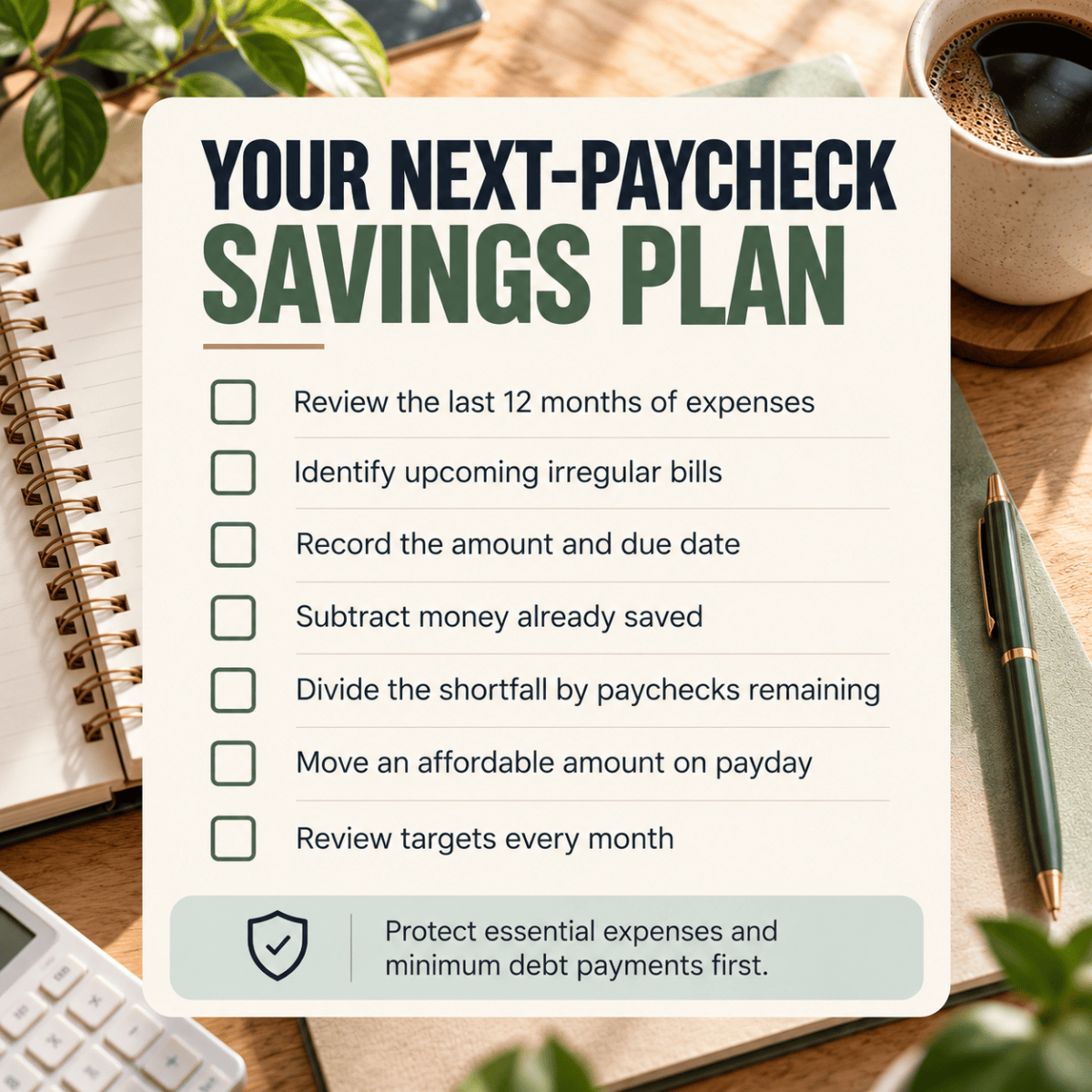
Start by reviewing the previous 12 months of bank and card statements. Identify recurring annual payments, seasonal purchases, and maintenance expenses that are reasonably foreseeable.
Next, record the expected amount, payment deadline, current savings balance, and remaining months for each category.
Then calculate a contribution for every payday. A household paid twice monthly may prefer 24 deposits a year, while someone paid every two weeks usually has 26 pay periods. These schedules are not interchangeable.
Keep the money separate from everyday spending, at least in your records. If you use one savings account for multiple goals, maintain a clear category ledger so you do not accidentally spend the same dollars twice.
Finally, review the targets monthly. Increase them when actual bills rise and reduce or close categories that no longer apply.
What if your income changes every month?
A fixed automatic contribution can be difficult for freelancers or households with irregular income.
Consider funding essential near-term bills first, then allocating a percentage of stronger-income months toward future expenses. Keep enough accessible cash for immediate obligations.
Do not set an aggressive sinking-fund target that causes overdrafts, missed minimum payments, or additional high-interest debt.
06 / AVOID COMMON MISTAKES
Common mistakes that make sinking funds fail
The first mistake is assuming every bill is 12 months away. A bill due next month requires a different savings strategy from one due next year.
The second is creating too many categories. If managing 20 envelopes becomes exhausting, group similar expenses into a smaller number of meaningful funds.
The third is mixing planned expenses with true emergency savings. A holiday budget should not compete with the money you may need after losing a job.
The fourth is purchasing budgeting supplies before developing a realistic plan. Attractive stationery cannot compensate for an unaffordable savings target.
Liquidity warning: The fifth mistake is overlooking liquidity. Money needed for a bill next month should generally not be exposed to stock-market volatility or locked into an arrangement with penalties that could prevent timely access.
07 / QUESTIONS ANSWERED
Frequently asked questions
1. Is a sinking fund the same as an emergency fund?
No. A sinking fund is for anticipated expenses, while an emergency fund is for unexpected financial disruptions. Both can be part of a complete savings plan.
2. How many sinking funds should I have?
Start with three to five categories that represent your largest recurring irregular expenses. Add more only when separate tracking makes your decisions easier.
3. Should I save for annual bills while paying off credit card debt?
It depends on the debt cost, upcoming obligations, and available cash. Cover essential near-term bills and required debt payments first. If debt carries high interest, prioritize avoiding additional borrowing and compare the cost of interest against your savings goals.
4. Can I keep sinking funds in one savings account?
Yes, provided you maintain an accurate record of each category’s balance. Separate accounts are optional, not a requirement.
5. Should sinking funds earn interest?
Interest can help, but access, fees, and account suitability matter more for near-term obligations. Check the account’s current terms and deposit insurance status before moving money.
6. What happens if I underestimate a bill?
Update the target and calculate the shortfall over the remaining pay periods. If the deadline is close, review discretionary expenses and ask the provider whether legitimate payment arrangements are available.
7. Is cash stuffing safer than keeping money at a bank?
Not necessarily. Cash may help some people control discretionary spending, but physical money is vulnerable to theft, loss, and damage. The CFPB identifies those risks when discussing where to hold emergency savings.
Final takeaway: make irregular bills predictable
Sinking funds are not about buying another financial product. They are about giving future expenses a place in today’s budget.
For most U.S. households, the strongest starting point is a written list of upcoming bills, realistic deadline-based savings calculations, and a separate place to hold the money.
Your next action: identify your three largest irregular expenses, calculate the amount needed before each due date, and schedule one affordable contribution from your next paycheck.
Only consider a paid planner or cash-envelope kit after you know what your current system is missing.
Sources and further reading
- CFPB — Assess Your Spending
- CFPB — An Essential Guide to Building an Emergency Fund
- FDIC — Banking With Third-Party Apps
- FTC — Endorsement Guides and Affiliate Disclosure
- Clever Fox — Budget Planner PRO Official Product Page
Financial education only; not individualized financial, tax, or legal advice. Example budgets are hypothetical. Prices and product availability require confirmation before publication.


Have a question or experience to share? Leave a comment below. 복사